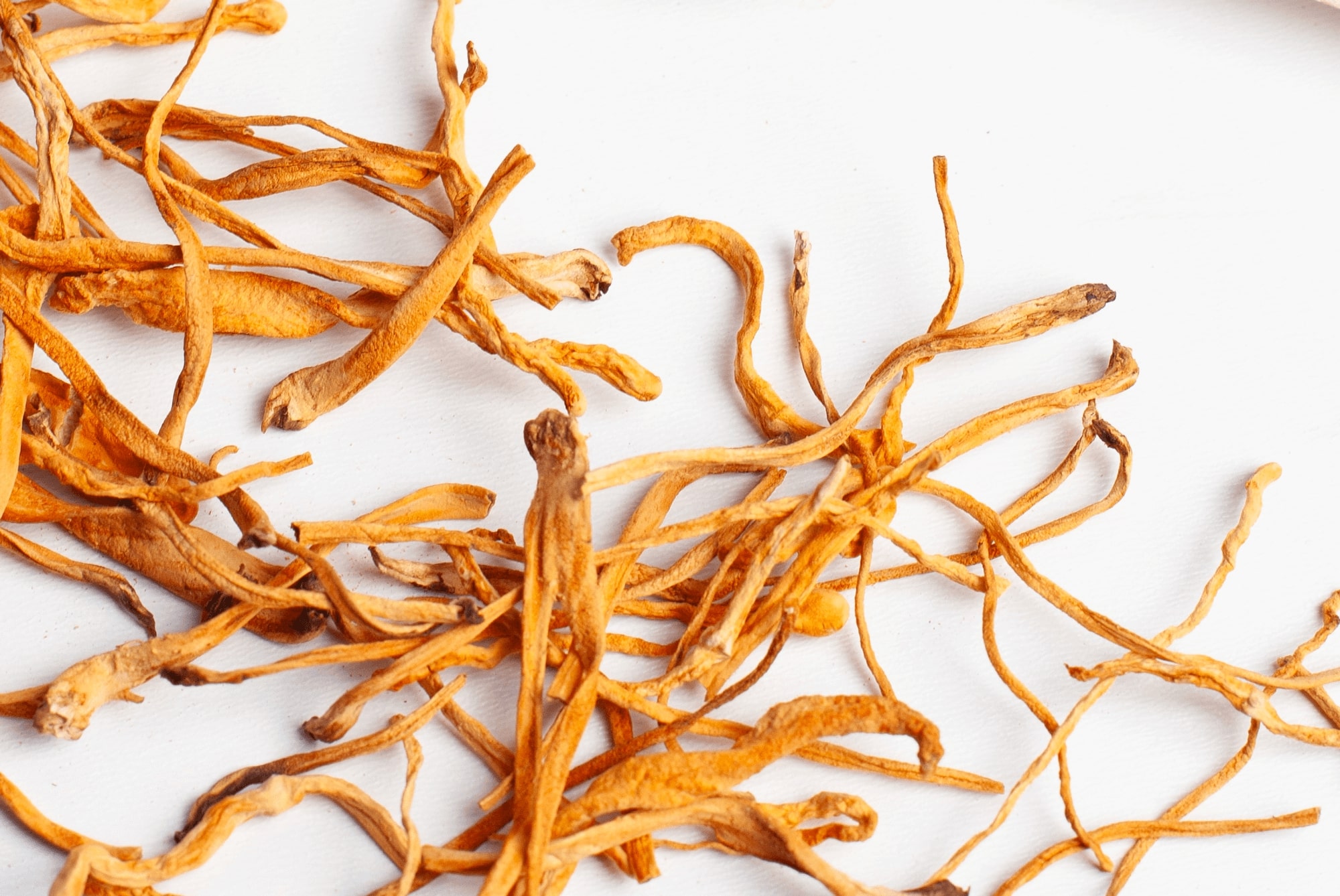
Cordyceps is one of the most popular medicinal mushrooms, known not only for its benefits, but also for its special behavior in the natural environment. This image of the "ant lord" confuses those who want to buy cordyceps mushrooms , but are not sure how safe they are (spoiler: safe). Therefore, in today's blog we decided to clarify the issues related to the possibilities of this natural raw material, its types and potential for use as a daily supportive supplement. What is cordyceps, what does it come in and what are the benefits of this dietary supplement for the body?
Cordyceps - what is it?
Cordyceps is a genus of fungi that includes over 600 different species of horn mushrooms, most of which grow in Asia. It gets its name from the species Cordyceps sinensis, which has a characteristic club-like fruiting body structure (cord - "club" and "ceps", meaning "club-headed");
Cordyceps contains a number of vitamins (E, K, B1, B2, B12), essential amino acids, trace elements (zinc, iron, magnesium, potassium), polysaccharides (in particular, beta-glucans) and specific substances, for example, cordycepin. These features of the mushroom have led to its use in Chinese folk medicine, and have also provided interest in it from official science;
Is cordyceps dangerous for humans?
In popular science films, cordyceps is known as a fungus that parasitizes insects and subjugates them to its will. In the wild, the fungus turns ants into zombies, forcing them to follow in the right direction and die on a leaf, becoming a substrate for the mycelium. This action is due to the effect of the hyphae of the fungus on the insect's muscular system. Over time, the zombie fungus sprouts from the ant's body and begins to spread spores in favorable conditions.
As for the potential negative effects on humans, cordyceps is completely safe for our body, causing no side effects in people with normal health. There are restrictions on the use of this mushroom in case of autoimmune diseases (since it strengthens the immune system), but in other cases it can be used as a daily dietary supplement;
It should be noted that for industrial use, in particular for medical purposes and for the production of supplements, other types of cordyceps are used, grown not on insect raw materials, but on soy, rice, wheat and other plant substrates. In this way, it is possible to obtain a product rich in beta-glucans, cordycepin and other active substances useful for humans, free from lead and other impurities found in wild species. The fact that in some advertising campaigns cordyceps as a dietary supplement is illustrated with images of ants is nothing more than a trick of Chinese marketers.
Types of Cordyceps: military and sinensis
Of the several hundred species of Cordyceps, the following types of fungus are most often used as dietary supplements:
- Cordyceps military;
- cordyceps sinensis.
Due to their rarity, mushrooms for commercial use are not harvested in natural conditions, but are grown in a controlled environment, which guarantees not only a stable harvest, but also high quality and uniformity of the raw material obtained.
Cordyceps militaris
Cordyceps militaris is a mushroom of the Cordycipitaceae family, traditionally used in traditional Chinese medicine and researched in pharmaceuticals. It is edible and is an ingredient in some classic Chinese dishes. For commercial use, Cordyceps militaris is grown on rice, soybeans, or wheat. It can be cultivated to the fruiting body stage, unlike Cordyceps sinensis. This species also contains a slightly higher amount of cordycepin compared to sinensis.
Cordyceps sinensis
Cordyceps sinensis is a mushroom that is also used in Chinese medicine. In 2007, based on DNA research, it was transferred to the Ophiocordycipitaceae family and classified as Ophiocordyceps sinensis. Its collection and sale have been regulated by the Chinese State Administration for Market Regulation since 2016, so the market price of this species reaches 20 thousand dollars per kg;
As a commonly available dietary supplement, Cordyceps manufacturers produce Cordyceps sinensis CS4, which is actually the fungus Paecilomyces hepiali from the Cordycipitaceae family. This is an industrially produced product that comes in the form of fermented mycelium with an increased amount of beneficial components.
Cordyceps sinensis strain CS4 (Paecilomyces hepiali) is a modern alternative to wild cordyceps, providing consistent quality, availability and environmental sustainability. In general, under difficult germination conditions, both sinensis and CS4 are not grown to the state of fruiting bodies. Unlike military cordyceps, where obtaining a fruiting body on grain substrates is a normal process, the grain does not get into the final product, and the concentration of active substances is quite high. With mycelium, the situation is somewhat different, and here important aspects arise that should be considered when choosing a product.
Cordyceps sinensis strain CS4 is the most popular type of cordyceps on the Chinese market due to its excellent medicinal properties and consistent quality. The wide range of products allows you to find cordyceps grown using various methods, including on grain substrates and, less often, on liquid cultures with a more complex and technologically advanced production process.
Growing on grain substrates
Growing Cordyceps mycelium on grain substrates is the simplest and cheapest cultivation method. However, this method has its drawbacks:
- Fewer nutrients: Mycelium grown on cereals contains fewer active components, such as cordycepin and adenosine, making it less effective compared to other cultivation methods.
- Low efficacy: Products obtained by this method may not provide the same high therapeutic value as products grown in more professional environments.
On the global market, the sinensis brand is usually CS4 grown on grain substrates. This is a popular choice due to its availability and low price, but it is not always the highest quality option.
Growing in liquid culture
The highest quality is provided by Cordyceps mycelium grown on rare cultures. This method has several significant advantages:
- High concentration of active substances: liquid cultures allow for optimal conditions for mycelium growth, which contributes to the accumulation of a greater number of beneficial components.
- Product purity: The exclusion of grain substrates reduces the risk of contamination by other microorganisms, ensuring a cleaner and safer product.
- Increased efficacy: products derived from mycelium grown on rare cultures have better therapeutic value and can provide a significantly higher effect from their use.
Advantages of buying from us
In our store you can order high-quality Cordyceps sinensis CS4 strain grown in liquid culture. We guarantee a high concentration of active substances and maximum effectiveness of our products. By choosing our Cordyceps, you get:
- the highest quality product meets all safety and efficiency standards;
- maximum concentration of nutrients thanks to the use of advanced cultivation methods;
- clean and safe product.
The difference in the composition and intake of Cordyceps CS4 and militaris
Cordyceps militaris and Cordyceps sinensis strain CS4 have different active ingredient compositions and different methods of administration, making them unique for different needs and applications.
Composition of Cordyceps CS4 and Militaris
Cordyceps militaris:
High concentration of cordycepin: Cordycepin is the main active ingredient of Cordyceps militaris, known for its antioxidant, anti-inflammatory and immunostimulating properties.
Cordyceps sinensis strain CS4:
Rich in other important nucleosides: In addition to cordycepin, Cordyceps sinensis contains high concentrations of adenosine and other nucleosides, which play an important role in supporting energy metabolism and regulating cellular functions.
What are nucleosides?
Nucleosides are organic molecules consisting of a nitrogenous base attached to ribose or deoxyribose. They are the basic building blocks of nucleic acids (DNA and RNA) and play important roles in cellular metabolism, energy metabolism, and signal transduction.
Taking Cordyceps militaris
Cordyceps militaris has a specific structure that requires certain preparation methods to ensure maximum bioavailability of the active substances:
- Steaming: It is recommended to steam Cordyceps militaris mushroom powder with hot water. This helps dissolve the chitin contained in the cell walls of the mushroom and release the active ingredients for better absorption by the body.
- Alcohol tincture: Making an alcohol tincture is another effective way to extract the benefits of Cordyceps militaris. The alcohol helps extract nucleosides and other bioactive components, increasing their bioavailability.
Taking Cordyceps sinensis (CS4 strain)
Cordyceps sinensis strain CS4 differs from militaris due to its fermentation process, which makes it easier to use. The mycelium of Cordyceps sinensis can be washed down with water, making it convenient for daily use without the need for additional processing.
Combinations with other mushrooms
Cordyceps militaris combines wonderfully with Lion's Mane mushroom powder. This combination provides a synergistic effect, combining the neuroprotective properties of Lion's Mane with the immunomodulatory and antioxidant benefits of Cordyceps militaris.
Cordyceps sinensis CS4 combines perfectly with the mycelium of the European blackthorn. This combination allows for a synergistic effect that supports brain and nervous system function, while increasing energy levels and immunity.
When choosing between Cordyceps militaris and sinensis strain CS4, it is important to consider personal needs and desired results.
Cordyceps release forms
As a dietary supplement, cordyceps is used in the following forms:
- dry mushroom extract - is a powder obtained during the extraction of beneficial substances from mushroom raw materials, therefore it contains up to 30% polysaccharides, in particular up to 20% beta-glucans;
- fermented mycelium - purified hyphae of Cordyceps sinensis CS4 , subjected to liquid fermentation to obtain a product with a high content of nutrients;
- mushroom powder - prepared by grinding dried fruit bodies (to increase the bioavailability of polysaccharides, it is brewed as tea).
The medical literature notes the antioxidant, anticancer, anti-inflammatory, antifibrotic, antifungal, hypoglycemic, anti-asthmatic, immunomodulatory, and other effects of cordyceps. Its properties are being studied for oncology, sexual dysfunction, type 2 diabetes, and other diseases. This fungus is also a well-known component in traditional medicine in Tibet and other regions of Asia.
In traditional Chinese medicine
Chinese healers have long noticed the effects of cordyceps on humans, using infusions and teas from this mushroom to treat various diseases:
- liver and kidney diseases;
- in case of colds, coughs and lung diseases;
- for potency.
It is also believed that the use of cordyceps helps strengthen immunity, helps eliminate fatigue, gives energy and strength. Since 1964, the most commonly used species C. militaris and C. sinensis have been included in the Chinese Pharmacopoeia.
For immunity
In official medical science, active research is being conducted on how useful cordyceps is for immunity. Various mechanisms of stimulation of the immune response are noted when using this mushroom, which is due to several immunomodulatory substances in its composition. For example, polysaccharide components activate intracellular processes and accelerate the immune response. In addition to polysaccharides, adenosine, guanosine, chloroquine and bafilomycin A, contained in C. Sinensis, contribute to strengthening immunity.
For the kidneys
Scientists are actively studying the benefits of cordyceps for the kidneys. One large-scale study (Hong Wei Zhang et al., 2014) showed that its use helped reduce creatinine levels in patients with chronic kidney disease. Also, the components of the mushroom protect the kidneys from the effects of toxic drugs and stop complications of diabetes. There is data (Li Y. et al., 2009) on the effectiveness of cordycepin as an immunosuppressant after kidney transplantation.
In sports
Cordyceps supplementation may benefit by stimulating the production of ATP, which is involved in muscle energy metabolism, which increases the efficiency of oxygen use during exercise. There is evidence that Cordyceps CS-4 supplementation was associated with a 7% increase in VO2 max in elderly subjects who exercised on a stationary bike. In young athletes, the increase was estimated at 11%, compared to a placebo group;
In case of inflammation
The therapeutic properties of Cordyceps in inflammation are due to the stimulation of the production of anti-inflammatory cytokines in macrophages. In the work of Chiu C.-P. et al. (2016) it was shown that this is facilitated by cerebrosides (cordicerebrosides), which are contained in C. militaris cerebrosides (cordicerebroside A, glucocerebroside).
Maintaining testosterone levels
Cordyceps mushroom also exhibits beneficial properties in terms of testosterone and dihydrotestosterone production, which is a promising solution for alleviating the condition of men during andropause (male menopause). This makes it possible to combat its manifestations such as muscle pain, loss of libido, aversion (apathy), depression, insomnia, etc. The corresponding effects are described in the work of Kazuya Kusama et al. (2021) and a number of other studies.
Increased libido
Studying the benefits of cordyceps, Guo Y. and co-authors showed that taking its extract for 8 weeks increases the number of sperm in men by 33%, reduces the frequency of sperm defects by 29% and increases their survival by 79%, which contributes to the growth of male sexual health. A number of other works have shown that the use of cordyceps-based drugs has a positive effect on sexual desire in men and women.
Blood sugar balance
Another benefit of taking Cordyceps militaris is that it helps lower blood sugar levels, as it contains cordycepin, polysaccharides, beta-glucan, and other components that improve glucose metabolism. For example, a similar result was confirmed in experiments by Yuan Dong et al. (2014) conducted in vivo on diabetic rats.
For the heart
Cordyceps is approved in Chinese medicine as a treatment for conditions characterized by an excessively irregular heartbeat, particularly arrhythmia. This is due to the action of adenosine, which is contained in the mushroom. There are also studies showing that the use of cordycepin and polysaccharides helps to reduce blood cholesterol and, consequently, reduce the risk of developing cardiovascular disease.
For the nervous system
There is a large body of work examining the effects of Cordyceps on the nervous system. For example, a study by Young Ock Kim et al. (2018) showed that C. militaris has therapeutic and neuroprotective effects in ischemic brain injury, ameliorates memory impairment, and enhances learning abilities. This effect makes Cordyceps potentially useful in hippocampal neuroprotection, neuroinflammatory diseases, and for the recovery of vascular dementias.
What are the reviews about Fungipapa cordyceps?
When choosing a dietary supplement, our customers ask which brand of cordyceps is the best. Fermented mycelium, extract and mushroom powder Fungipapa are made from two types of mushrooms (Chinese and military), grown on vegetable and liquid substrates under controlled conditions. This guarantees the quality of the dietary supplement and the absence of foreign impurities;
Contraindications of cordyceps
When using cordyceps, contraindications are as follows:
- autoimmune diseases - contraindications are related to the ability of cordyceps to activate the immune system;
- before surgical interventions (cordyceps should be stopped two weeks before surgery).
Cordyceps side effects
Cordyceps is safe for most people when taken orally for up to 1 year in doses up to 6 grams per day. In rare cases, the use of dietary supplements may be accompanied by mild side effects:
- feeling of discomfort in the stomach;
- constipation;
- diarrhea.
Methods of use and dosage of cordyceps
The rules of administration for each product are determined by the instructions for each type of cordyceps drug. How to drink cordyceps in the form of a dry extract:
- 1 tsp three times a day 30 minutes before meals, washed down with water;
- in the form of tea at the rate of 1 tsp powder per 150 ml of hot water.
The method of using cordyceps in the form of mushroom powder involves pre-brewing tea in the same proportions to increase the bioavailability of beta-glucans;
Conclusion
Cordyceps is a popular mushroom that is widely used in traditional and official Chinese medicine, and is also being studied by science for the beneficial properties of cordycepin, beta-glucans, and other components. When used as a dietary supplement, it is a good way to support the body, especially when combined with other species, including reishi and lion's mane mushrooms .