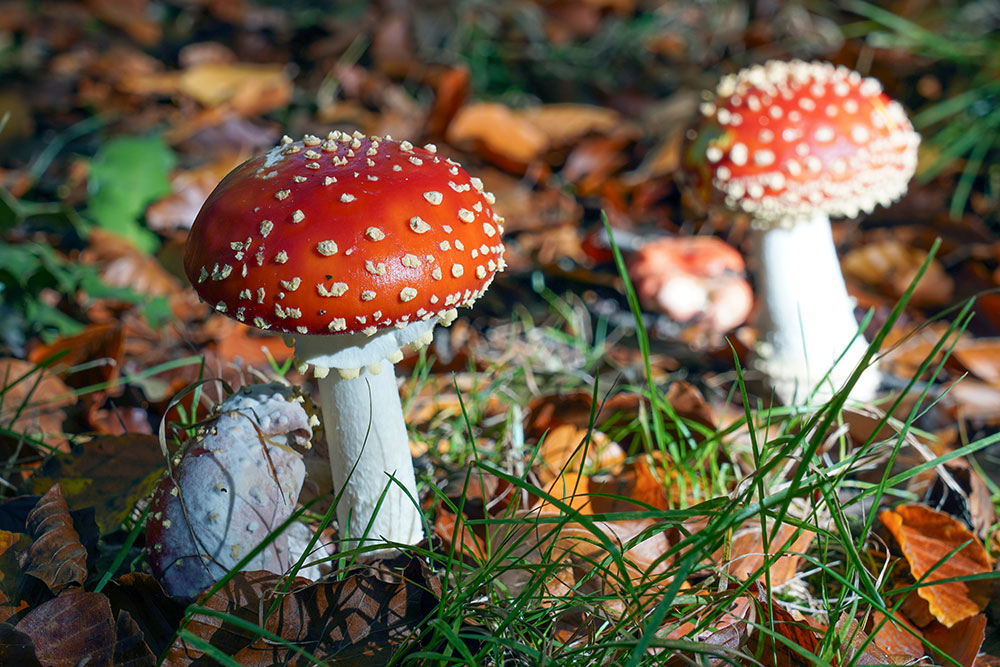
Fly agarics, particularly the red fly agaric (Amanita muscaria) and the black fly agaric (Amanita pantherina), have long been known for their psychoactive properties. Historical records show their use in various cultures, especially among the peoples of Siberia, where fly agarics were used as part of shamanic rituals. They used these mushrooms to achieve an altered state of consciousness, which helped them communicate with spirits and conduct ritual practices. Fly agarics were believed to have magical properties, and their influence on the mind allowed shamans to access the afterlife.
Studies on the health benefits of fly agarics show that red fly agaric may have medicinal properties, although its use requires caution due to potential side effects.
The panther fly agaric mushroom is known for its unique biologically active substances that attract the attention of researchers.
The benefits of panther fly agaric lie in its potential anti-inflammatory and neuroprotective properties, but it requires careful use.
The use of panther fly agaric in folk medicine is associated with traditional recipes, but without strict dosage control, it can be dangerous.
However, interest in the red and panther fly agaric has only recently emerged in the West, largely due to the rise in popularity of psychedelic drugs. The current wave of popularity of the fly agaric is supported by information about its possible therapeutic properties, including in combating stress, anxiety, and sleep disorders.
This trend is fueled by active propaganda on the Internet, where fly agarics are often presented as natural remedies for self-treatment. However, this use is accompanied by serious risks, especially due to uncontrolled consumption and insufficient awareness of their toxic properties.
Fly agarics in the wild
Red and panther fly agarics occur in the wild in various regions of the Northern Hemisphere. They can be found in the forests of Europe, Asia and North America, especially under coniferous and birch trees, with which they form mycorrhiza. These mushrooms are not cultivated on an industrial scale, which makes their production dependent on wild specimens. Because of this, their properties can vary greatly depending on growing conditions, climate and soil type.
Microdosing mushrooms
Microdosing mushrooms is becoming an increasingly popular way to improve mood and concentration. Of particular interest is the microdosing of fly agarics, which, despite its beneficial properties, requires special caution due to potential risks and contraindications. Before starting this method, it is important to consult a doctor and carefully study the dosage to avoid unwanted effects and make the most of the therapeutic potential of these mushrooms.
Active substances
The main active compounds of the fly agaric are muscimol and ibotenic acid . Muscimol is the main psychoactive component, which causes changes in consciousness by acting on GABA receptors in the brain. Ibotenic acid is less active, but it is the precursor to muscimol and is responsible for the toxic effects of the red fly agaric, such as nausea, incoordination, and convulsions. Drying the mushrooms at certain temperatures (60-70°C) helps convert ibotenic acid to muscimol , reducing toxicity and increasing psychoactive properties.
Muscarine , another compound in fly agaric, has a significant toxic effect on the parasympathetic nervous system, although its concentration in red fly agaric is low.
Harvesting methods and problems of concentration of active substances
Harvesting fly agarics requires special conditions, as the active substances are very sensitive to temperature and processing methods. Most often, the mushrooms are dried, which helps convert ibotenic acid to muscimol, but the wrong temperature or processing time can destroy some of the active compounds or, conversely, leave an excess of toxic ibotenic acid.
Another problem is the uneven concentration of active ingredients in fly agarics. Because these mushrooms grow in the wild, their chemical composition can vary depending on the region where they are collected, the season, and even the age of the mushroom. This creates serious difficulties in determining a safe and effective dose for consumers. In addition, modern fly agaric products sold as supplements can have unstable levels of active ingredients, making them difficult to use for therapeutic purposes.
Current research into the therapeutic potential of red and panther fly agarics (Amanita muscaria and Amanita pantherina) is gaining increasing attention due to their psychoactive properties and possible benefits in combating anxiety disorders, stress, and sleep disorders. However, scientific evidence is still lacking, and most of the information is based on preliminary studies that need further confirmation.
Effects of muscimol on the nervous system
- However, human studies are still limited. There are a few publications that highlight the possibility of using muscimol as an alternative to traditional benzodiazepines or hypnotics, but for now, these data require additional clinical trials.
2. Analgesia and anti-inflammatory properties:
- Some studies suggest that muscimol has potential as an analgesic. For example, in rodent experiments, muscimol has shown the ability to reduce pain sensation in inflammatory conditions.
- It is also being investigated for its possible anti-inflammatory effects, which could be useful in treating chronic pain or diseases associated with inflammation. However, as with its psychoactive properties, these studies have not yet progressed to clinical trials in humans.
3. Possible benefit for treating anxiety disorders and PTSD:
- There is speculation that muscimol may help reduce symptoms of anxiety disorders and post-traumatic stress disorder (PTSD) through its action on GABA receptors, which play a key role in the regulation of stress and anxiety. The beneficial properties of fly agaric have attracted the attention of researchers due to its potential effects on the nervous system, immunity and general psycho-emotional state. However, the use of fly agaric for the treatment of PTSD is controversial due to the risks associated with uncontrolled psychoactive effects.
4. Neuroprotective potential:
- Previous studies have shown that muscimol may have neuroprotective properties - protecting nerve cells from damage caused by stress or diseases such as neurodegenerative diseases (such as Parkinson's or Alzheimer's). This is due to muscimol's ability to stabilize the activity of neurons and prevent them from becoming overexcited.
Limitations and risks of modern fly agaric research
1. Dosage instability:
- One of the main barriers to studying the therapeutic properties of fly agarics is the difficulty in standardizing dosage. Because the mushrooms grow in the wild, the concentration of active ingredients, such as muscimol and ibotenic acid, can vary greatly. This makes it difficult to research and develop safe therapeutic doses.
2. Psychoactive and toxic effects:
- Although muscimol has therapeutic potential, its psychoactive properties pose significant health risks, especially when consumed indiscriminately. Ibotenic acid, present in mushrooms, has toxic properties that can cause nausea, incoordination, seizures, and other adverse effects. Researchers are constantly faced with the question of how to minimize toxicity while maintaining the therapeutic effects of muscimol.
3. Lack of clinical trials on humans:
- Most studies to date have been conducted on animals or in laboratory settings. There is very little data on long-term effects in humans, and what is available is often based on uncontrolled observations or folk practices. This makes it difficult to assess the real risks and benefits of fly agaric in the context of modern medicine.
4. Risk of mental complications:
- People with psychological problems such as PTSD, depression, anxiety disorders, or even sleep problems can experience serious complications after consuming red fly agaric. Because this mushroom affects the brain at the neurotransmitter level, such people may experience increased symptoms or even new mental disorders.
- Self-medication with fly agaric for mental illnesses without consulting a psychiatrist is a serious mistake that can lead to aggravation of the disease, up to the development of acute psychosis.
5. Physical side effects:
- In addition to the psychoactive effects, fly agaric can cause physical symptoms such as dizziness, muscle spasms, and incoordination. In severe cases, there is a risk of dehydration due to vomiting and diarrhea, which often accompany red fly agaric poisoning.
- Poisoning by panther fly agaric is manifested by severe symptoms and requires immediate medical attention, so it is important to avoid self-use of this mushroom.
- Using fly agaric in uncontrolled conditions also increases the risk of injury due to impaired coordination or seizures.
6. Social risks and propaganda:
- The current active promotion of red and panther fly agaric often ignores the real health risks, especially among people without proper knowledge or experience. The temptation to consume this mushroom without understanding how important the correct dosage of red fly agaric is often ends in negative consequences.
- It also contributes to the illusion that natural products cannot be harmful, which is a misconception. Natural does not always mean safe, and fly agaric is a prime example of this.
Ukraine has suffered significant radioactive contamination since the Chernobyl nuclear power plant accident, which affected many regions of the country. One of the main radioactive elements that has spread across the territory of Ukraine is cesium-137. Mushrooms, including fly agarics, are particularly sensitive to the accumulation of this radioactive element, making them unsafe for consumption in contaminated areas.
It is especially worth noting that even in regions considered ecologically clean, such as Ivano-Frankivsk and Chernivtsi regions, the level of cesium contamination can be quite high. These regions, along with other western regions, are at increased risk of mushroom contamination due to the accumulation of radionuclides in the soil. This creates additional health risks when collecting and consuming wild mushrooms, in particular fly agarics, without prior analysis for the content of radioactive substances.
In addition to cesium-137, it is also worth considering the presence of americium-241, which gradually accumulates in the environment due to the decay of other radioactive isotopes. The forecast shows that by 2056, particularly high levels of americium-241 contamination are expected in the north of Kyiv and Zhytomyr regions. These are regions where the accumulation of radioactive elements may pose an even greater threat to wild mushrooms, such as fly agarics. Eating mushrooms from these areas without prior testing for radionuclide content may pose a significant health risk.
Safer alternatives
1. Ashwagandha and other adaptogens:
- Ashwagandha is a natural, non-toxic adaptogen that helps regulate cortisol levels, reducing stress and promoting better sleep. It is gentle and safe for long-term use.
2. Lion's mane mushroom:
- Lion's mane mushroom is an edible mushroom that has been studied and noted for improving cognitive function and supporting the nervous system in people of all ages, and it has no psychoactive or toxic properties. It helps reduce anxiety and improve sleep quality without the risk of negative mental or physical effects.
3. Consultation with a specialist:
- People seeking treatment for anxiety, PTSD, or insomnia should consult with their doctors, particularly psychiatrists, who can recommend safe treatments that do not involve the risks associated with using fly agaric.
Conclusion
The red fly agaric mushroom has some therapeutic potential, but the risks associated with its use far outweigh the benefits for most people. This is especially true for those who suffer from psychological disorders. Uncontrolled use of fly agaric can lead to serious negative consequences for physical and mental health, so it is worth considering safer methods of treatment and be sure to consult with specialists. Despite its toxicity, the benefits of red fly agaric, if used correctly, can be manifested in improving the psycho-emotional state and relieving chronic stress.
This article is for informational purposes only and does not constitute medical advice or treatment recommendations. The use of red or panther fly agaric, or any other product, should only be undertaken after consultation with a qualified medical professional. The authors are not responsible for any consequences that may arise from the independent use of the information in this article.