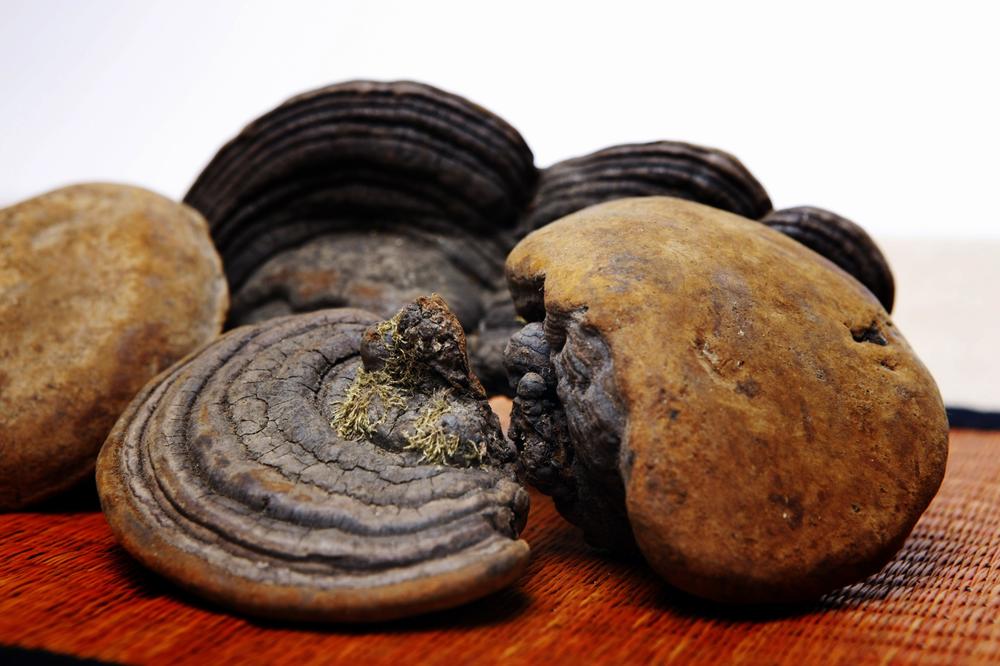
The world of medicinal mushrooms has its own “legends.” One such mushroom is Sanghuang, known in the East as the “Mushroom of Life.”
Parables were written about it in ancient China, warriors and emperors trusted it, and in Japanese and Korean monasteries, Sanghuang was considered a source of strength, endurance, and protection against disease. However, for a long time this mushroom remained in the shadows, losing its glory to the more famous Reishi.
Today, as science increasingly studies “old acquaintances” from Eastern medicine, Sanghuang is regaining the attention it deserves.
What makes it special?
Why do researchers and doctors around the world call this mushroom a promising helper for the immune system and longevity?
Let's figure it out together — without myths, with an eye to both the past and modern science.
History and cultural context of Sanghuang
In Chinese sources from the Han Dynasty (206 BC – 220 AD), it is mentioned as one of the key components for purifying the blood and strengthening the body. It was then that it began to be called the “elixir of youth”, available only to the imperial family.
In Japan and Korea, this mushroom was valued even more. Samurai Miyamoto Musashi is known to have drunk an infusion of Sanghuang before fights to increase concentration and endurance. Soldiers used Sanghuang as a restorative after heavy battles, and monks considered it a source of inner strength for meditation and long rituals.
For centuries, this mushroom has remained a “secret for the chosen ones,” a symbol of protection, endurance, and longevity. And only now, with the development of science, are the unique properties of Sanghuang becoming available to all who seek natural support and balance.
Who and what is Sanghuang suitable for?
Sanghuang (Phellinus linteus) is a mushroom most often chosen for:
Natural support of the immune system: prevention of viral infections, reduction of the frequency of colds, facilitation of recovery from illnesses.
Regulation of inflammation and prevention of chronic conditions: frequent sinusitis, bronchitis, inflammatory joint diseases, metabolic syndromes.
Reducing the manifestations of allergies and immune hyperreactivity: seasonal or year-round allergic rhinitis, skin reactions, asthma (as part of complex therapy).
Support for blood vessels, microbiome, metabolism: especially at the age of 40+, at risk of diabetes, high cholesterol, hypertension.
Recovery after serious illnesses and antibiotic therapy: to restore immune balance and microbiome.
Support for people with cancer:
In international clinical practice, Sanghuang extract is used as an auxiliary (adjuvant) agent in cancer treatment regimens: to support immunity during chemotherapy or radiation therapy, reduce treatment toxicity, and improve overall well-being and quality of life.
Memorial Sloan Kettering Cancer Center and the Cochrane Review note the potential of Phellinus linteus as additional support, but emphasize: use is possible only on the recommendation of a doctor and does not replace basic therapy!
Sanghuang may also be useful for:
Active people and athletes - as a natural prevention of chronic inflammation and support for recovery.
Older people - for long-term prevention of chronic processes, support of blood vessels, joints, and microbiome.
The main beneficial properties of Sanghuang
1. Immunomodulatory effect
Current research confirms that Phellinus linteus stimulates macrophages, B cells, and natural killer (NK) cells—the immune system’s main fighters that defend the body against viruses and cancer cells. It also enhances the production of important protective proteins—cytokines, such as IL-1β, IL-6, and TNF-α—that play a key role in regulating inflammation and fighting infections.
Phellinus linteus and its effect on immunity: what did the study show?
One recent clinical study evaluated the effects of Phellinus linteus extract on the immune system. It was a randomized, double-blind, placebo-controlled trial in which participants received 1000 mg of Phellinus linteus extract per day (500 mg twice daily) for 8 weeks.
Research results
Even at a relatively small dose, an increase in the activity of natural killer cells (NK cells), which play an important role in fighting viruses, bacteria, and abnormal cells, has been recorded.
There was a trend toward increased levels of key immune cytokines such as IL-12, IFN-γ, and TNF-α, indicating a potential enhancement of the immune response.
Importantly, no serious side effects were recorded – biochemical indicators of the liver and kidneys remained within normal limits.
2. Antiviral activity
Studies have shown that this mushroom contains the compounds hispidin and hypholomin B, which prevent the SARS-CoV-2 virus from entering cells. They block the ACE2 receptor, through which the coronavirus attaches to the cell, and inhibit the reproduction of the virus. This opens up the prospects for using Phellinus linteus as an additional agent in antiviral therapy.
3. Antitumor and antimetastatic properties
Phellinus linteus has attracted the attention of researchers due to its ability to slow tumor growth and reduce metastasis. Its active components not only prevent the spread of cancer cells, but also inhibit the formation of new blood vessels that feed the tumor. Compounds such as hispolon, PBP polysaccharides, and PLP enzymes promote the death of cancer cells through natural mechanisms of apoptosis.
Individual cases in cancer treatment
Some clinical cases demonstrate that Phellinus linteus extract can play an important role in supporting the body in the fight against cancer.
- Japan: A man with metastatic prostate cancer showed significant improvement after regularly taking Sanghuang extract when all other methods failed.
- Korea: Patient with hepatocellular carcinoma (HCC) and skull metastases – after 18 months of taking the mushroom, the tumor shrank significantly.
- Japan: 79-year-old man with liver cancer and multiple lung metastases – after six months of taking Phellinus linteus, the tumors completely disappeared without additional therapy.
Although such cases are not official clinical evidence, they are officially recorded and demonstrate the potential of the mushroom as a supportive agent for cancer.
4. Antidiabetic effect
Phellinus linteus polysaccharides may improve insulin sensitivity, normalizing blood sugar levels. This is achieved through the regulation of the gut microbiota and increasing levels of short-chain fatty acids (SCFAs), which support gut health and reduce systemic inflammation.
5. Improving blood circulation
Phellinus linteus helps to dilate blood vessels, improving blood circulation. Studies in rats have shown that the mushroom extract affects ion channels in vascular smooth muscle, causing them to relax and improve blood circulation. This makes it a promising tool for supporting cardiovascular health.
6. Joint support and inflammation reduction
Inflammation is a major cause of joint pain and diseases such as arthritis. Studies have shown that Phellinus linteus extract has anti-inflammatory effects, helping to reduce pain, swelling and cartilage breakdown. Its polysaccharides inhibit the enzyme COX-2, which is a key factor in inflammatory reactions, and also reduce the level of pro-inflammatory cytokines.
7. Anti-allergic properties
Phellinus linteus may help reduce allergic reactions through its effects on the immune system. Studies have shown that the mushroom extract can reduce levels of histamine, which causes allergic symptoms, and inhibit the activation of mast cells, the cells responsible for allergic reactions. This makes Sanghuang mushroom beneficial for people suffering from seasonal allergies, asthma, and other immune disorders.
Dosage and methods of use
Scientific studies have shown that the effective dose of Phellinus linteus:
- 1000-1500 mg of extract per day – for immune support.
- 1500-3000 mg – to combat inflammation and prevent diseases.
- Up to 4000 mg – in complex therapy for oncological diseases .
How to take?
- Capsules or powder are a convenient format.
- Tea or decoction is the traditional method.
- Tinctures and extracts – fast absorption.
It is recommended to take courses of 6-8 weeks with breaks.
Conclusions
Phellinus linteus is not just another mushroom, but a powerful natural remedy for maintaining health.
As a dietary supplement, Sanghuang can be an effective element of a healthy lifestyle, contributing to the prevention of chronic diseases and overall strengthening of the body. Its unique composition and scientifically proven properties make it one of the most promising natural products for longevity and active living.
Warning:
This article is for informational purposes only and is not intended to be medical advice or treatment guidance. Please consult your doctor before using any herbal remedy, especially if you have a chronic medical condition, autoimmune disorder, or are taking medications.
Sources:
- Ku YH, Kang JH, Lee H. Effects of Phellinus linteus extract on immunity improvement: A CONSORT-randomized, double-blinded, placebo-controlled trial, 2022.
- Kim GY, Oh WK, Shin BC Proteoglycan isolated from Phellinus linteus inhibits tumor growth through mechanisms leading to an activation of CD11c+CD8+ DC and type I helper T cell-dominant immune state, 2004.
- Eom SY, Zhang YW, Kim NS Effects of Keumsa Sangwhang (Phellinus linteus) mushroom extracts on the natural killer cell activity in humans, 2006.
- Shin MR, Lee JH, Lee JA Immunomodulatory and anti-inflammatory effects of Phellinus linteus mycelium, 2021.
- Kim HM, Han SB, Oh GT Stimulation of humoral and cell-mediated immunity by polysaccharide from Phellinus linteus, 1996.
- Lee JW, Baek SJ, Bang KW Antitumor and antioxidant activities of the extracts from fruiting bodies of Phellinus linteus, 2006.
- OhHashi F., Kataoka T., Tsugagoshi S. Effect of combined use of anticancer drugs with a polysaccharide preparation, keratin, on mouse leukemia P388, 1976.
- Rahman MM, Mosaddik A., Alam AK Traditional foods with their constituents' antiviral and immune system modulating properties, 2021.
- Kaminogawa S., Nanno M. Modulation of immune functions by foods, 2004.
- Casper SJ, Trowsdale J. Promiscuity and the single receptor: NKG2D, 2007.