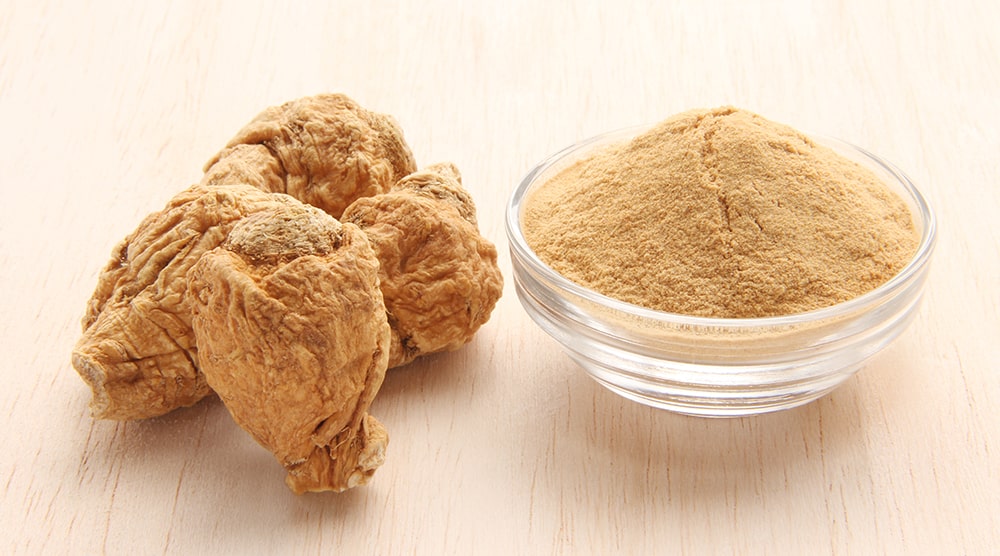
In our online store you can buy Peruvian maca - a biologically active supplement that is used in traditional medicine in South America and is actively studied by official science. What is Peruvian maca, why is it needed, and what benefits does this superfood provide?
Peruvian Maca - what is it?
Peruvian maca (Lepidium meyenii) is a plant of the Brassicaceae family, which is also known as Peruvian ginseng, Mayen's knotweed. There is also a related species L. peruvianum, which is different in taxonomy and is not cultivated on an industrial scale. In appearance and description, Peruvian maca resembles a turnip, parsnip or radish.
The species Lepidium meyenii maca grows in Peru - high in the mountains at an altitude of over 3800 meters, being one of the most frost-resistant cultivated plants, because it is able to tolerate temperatures from -10 ° C. It is cultivated through hypocotyls - root crops weighing from 1 to 5 kg, which have both nutritional and medicinal value. Residents of Peru, Bolivia and Brazil roast maca, prepare puree from it with milk, use it as an ingredient in soups, jams and other dishes. It is also ground to make bread or sweet pastries.
The majority of commercially grown maca is dried, as it can be stored for several years in this form. The earliest archaeological evidence of maca use dates back to approximately 1700 BC. In traditional medicine, the medicinal properties of Peruvian maca are known as a remedy for male and female health, as well as for increasing cognitive abilities in children.
Composition of maca
The composition of Peruvian maca powder includes the following main components:
- carbohydrates - up to 75% (mainly polysaccharides);
- proteins - up to 14%;
- dietary fiber - 8.5%;
- fats - 2.2%.
Dried raw material from maca hypocotyls is rich in essential amino acids (leucine, arginine, phenylalanine, lysine, glutamic acid, etc.), free fatty acids (linoleic, oleic and palmitic), as well as minerals. It contains iron (16.6 mg per 100 g of dry powder), calcium (150 mg), copper (5.9 mg), zinc (3.8 mg) and potassium (2050 mg). Due to the complex of these substances, poppy can be considered as a dietary supplement that provides daily support for the body.
In addition to the main nutrients, Peruvian maca contains non-starch polysaccharides, polyphenols, malameds, glucosinolates, and macaridin, macamides, macain, and "maca alkaloids" are found only in this plant.
Useful properties of maca
During scientific research, secondary metabolites of maca (alone or in combination as part of natural raw materials) have demonstrated a number of biological effects, including:
- improving reproductive function;
- neuroprotective effect;
- antioxidant effect;
- reduced fatigue;
- anti-cancer protection;
- hepatoprotective effect;
- anti-osteoporosis;
- relief of memory impairment;
- immunomodulation;
- lowering blood pressure;
- skin protection when exposed to the sun.
The beneficial properties of Peruvian maca are being studied by modern science, especially regarding its health benefits for men and women, in particular, increasing fertility and reproductive health.
For women
Poppy root for women potentially provides the following effects, confirmed in mouse models, other animals, and humans:
- increasing the survival rate of embryos;
- reducing sexual dysfunction in postmenopause;
- reducing feelings of anxiety and depression due to the presence of flavonoids;
- Peruvian maca for women helps reduce symptoms (sweating, hot flashes) during perimenopause and menopause by regulating estrogen levels.
For men
Numerous scientific studies have shown that Peruvian maca for men offers the following potential benefits:
- increased sexual function and desire (presumably due to the action of macaene and macamides);
- reduction of erectile dysfunction;
- increasing sperm count and sperm quality;
- prevention of prostatic hyperplasia due to the action of benzyl glucosinolates and polyphenols.
How to take Peruvian maca
How to properly take Peruvian maca powder:
- How to take Peruvian maca as a dietary supplement: 0.5 or 1 teaspoon of powder with food 1-3 times a day;
- How to drink Peruvian maca as a component of drinks: 1 teaspoon per 150 ml of boiling water, consume chilled.
Synergistic effect of Peruvian Maca with Ashwagandha
Maca and ashwagandha are recommended to be taken together because the effects of these natural dietary supplements are mutually reinforcing.
Benefits of Ashwagandha:
- Reducing stress levels: Ashwagandha effectively reduces stress and anxiety, promoting rest and relaxation;
- Improving sleep: Due to its calming properties, Ashwagandha may improve sleep quality;
- Libido support: This adaptogen is also known for its ability to increase sex drive;
- Hormonal Balance: Ashwagandha helps regulate hormonal balance in men and women.
Benefits of Peruvian Maca:
- Increasing energy levels: Maca is known for its ability to naturally increase the body's endurance and energy;
- Improving fertility: Maca is often used to increase fertility and improve reproductive health;
- Increased libido: It is also known for its ability to increase libido in both men and women.
- Testosterone support: The supplement can help maintain healthy testosterone levels, especially in men.
When taken together, these two adaptogens create a unique combination of benefits. Together, they not only increase energy levels and endurance, but also help the body recover from physical and mental stress. Their combination helps maintain emotional balance, providing peace and improving sleep quality, increasing sexual desire and harmonizing hormonal levels. Thus, the combination of "macula and ashwagandha" can be an excellent choice for those looking for natural remedies to support their body.
Contraindications of maca
Peruvian Maca contraindications:
- pregnancy;
- lactation period;
- individual intolerance.
There is no pharmacokinetic data on the harms of Peruvian maca.