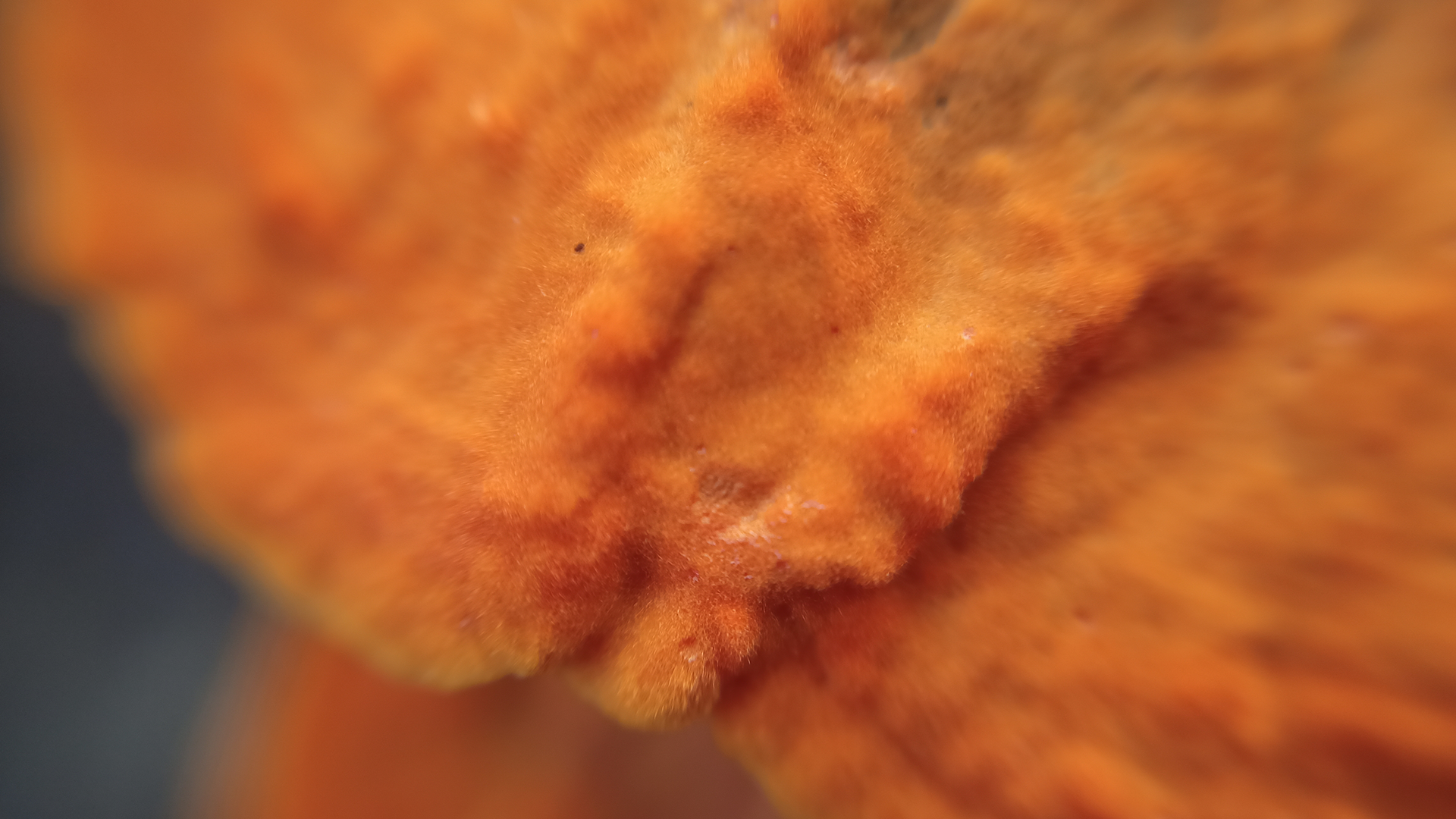
Antrodia camphorata (Antrodia cinnamomea) grows exclusively inside the trunks of a single tree species - the camphor laurel (Cinnamomum kanehirae), found only in the mountain forests of Taiwan at elevations between 450 and 2,000 meters. This strict dependency on one host tree made it one of the rarest and most expensive mushrooms in the world: before cultivation became possible, wild specimens sold for up to $15,000 per kilogram. Demand was so intense that the Taiwanese government placed the camphor laurel under state protection.
That same dependency shaped an extraordinary chemical profile: over 200 identified bioactive compounds - more than any other known functional mushroom. Many of these substances have not been found anywhere else in nature. They define how Antrodia acts on the body and explain why scientific interest in this mushroom has grown well beyond traditional medicine.
What is Antrodia camphorata - and what makes it so unusual
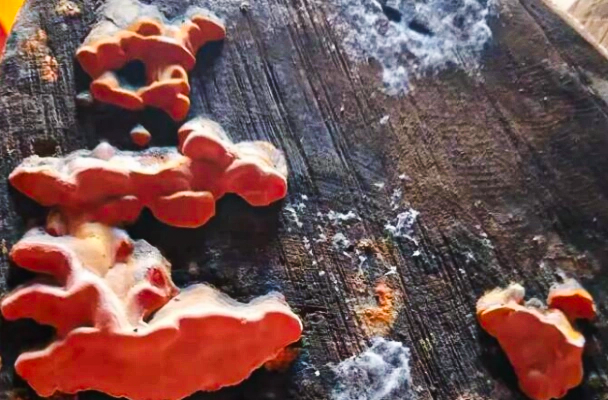
Antrodia camphorata belongs to the basidiomycete class - the same group as reishi, chaga, and most other functional mushrooms. Unlike them, it does not grow on fallen logs in forests and cannot be cultivated on sawdust or grain. Its only growing medium is the decaying interior of a living camphor laurel trunk. The fruiting body is flat and wavy, pressed against the wood from the inside, ranging from orange-red to dark brown. It grows exceptionally slowly - even by mushroom standards.
Where and how it grows
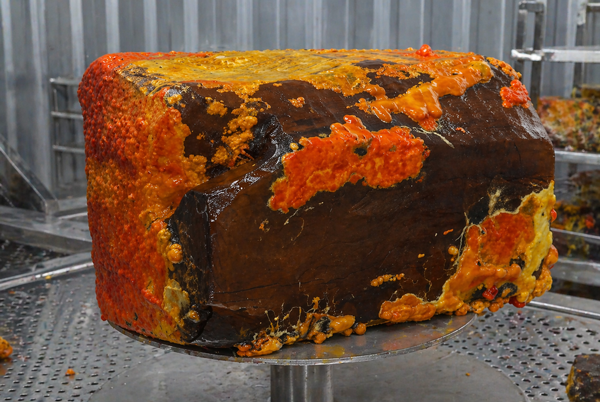
The camphor laurel is found only in Taiwan, in mountain districts including Taoyuan, Miaoli, Nantou, Kaohsiung, Taitung, and Hualien. Extensive felling - both for timber and to access the mushroom - led to the tree being placed under government protection. Today, Antrodia is cultivated artificially on camphor laurel logs from managed plantations or on specially prepared substrates that replicate the wood's composition. Mycelium is also cultivated in liquid media, and this form became the basis for most modern extracts.
Traditional use and early records
Taiwan's indigenous peoples used Antrodia long before scientific research began - as a remedy for food poisoning, alcohol intoxication, and liver ailments. The earliest written medical descriptions date to 1773. In traditional Taiwanese medicine the mushroom is called "niu-chang-chih," and today it remains one of the most actively studied functional mushrooms in Asian science. The annual Antrodia market in Taiwan exceeds $100 million - even after affordable cultivated forms became widely available.
What's inside Antrodia - and why it's unlike other functional mushrooms
Most functional mushrooms are valued primarily for their beta-glucans - a type of fiber that interacts with the immune system. Antrodia contains these too. What sets it apart from reishi, chaga, or cordyceps is the sheer number and diversity of other bioactive compounds found in this mushroom.
Over 200 unique compounds
More than 200 bioactive substances have been identified in Antrodia - antcins, zhankuic acids, antrocamphorins, and others. Most are found exclusively in this mushroom and have not been discovered anywhere else in nature. For comparison, reishi - considered one of the richest functional mushrooms in terms of composition - contains around 150 such unique compounds. This diversity stems from the chemical environment of the camphor laurel, which the mushroom absorbs and transforms throughout its growth.
Antroquinonol - the compound that caught pharmacologists' attention
One of Antrodia's compounds - antroquinonol - has attracted particular attention from researchers. It concentrates mainly in the mycelium and influences cellular processes through mechanisms being studied in the context of various diseases. Antroquinonol completed Phase I clinical trials in the United States and Taiwan, and the FDA granted it orphan drug status - meaning the government supports its further research in rare diseases. It is important to understand that this refers to an isolated, purified molecule in pharmacological doses - a different context from consuming a dietary mushroom extract. But the fact that such institutional scientific interest exists speaks to the potential of the source material.
Zhankuic acid - where traditional use and modern pharmacology converge
Among Antrodia's hundreds of compounds is zhankuic acid A - a substance that drew researchers' attention from an unexpected angle. A study by Chen et al. (Biochemical Pharmacology, 2014) identified it as a JAK2 inhibitor - a protein that triggers the inflammatory cascade in hepatitis and other inflammatory conditions. The same molecular target is used in modern drugs for rheumatoid arthritis, such as ruxolitinib and similar agents. A mushroom that Taiwan's indigenous people used for poisoning for centuries turns out to contain a compound that works through a mechanism pharmacologists discovered much later.
Polysaccharide profile of the mycelial extract
During hot water extraction, bioactive compounds are released from the cellular matrix and become water-soluble. A standardized polysaccharide extract contains a concentrated dose of the mushroom's active fractions and is absorbed regardless of individual digestive characteristics.
Effects on the liver - what research shows
Liver support is the most extensively studied area for Antrodia. Taiwan's indigenous peoples used the mushroom for exactly this purpose for centuries. Modern research explains why.
How Antrodia acts on liver cells
Several of Antrodia's compounds act on the liver through different mechanisms simultaneously. Antcin K - one of its key substances - reduces levels of the liver enzymes ALT and AST (markers of liver damage measured in standard blood tests) in animal models of alcohol-induced injury (Wu et al., Chinese Journal of Natural Medicines, 2019). In parallel, antroquinonol activates the liver cells' own protective mechanism through Nrf2 - a protein that triggers the production of antioxidants inside liver cells. Another compound - ergosterol-3β-ol - reduces inflammatory markers TNF-α and IL-6 in laboratory and animal models of liver injury (Chao et al., Preventive Nutrition and Food Science, 2021).
Why indigenous peoples used this mushroom specifically for alcohol intoxication
The traditional use of Antrodia for alcohol poisoning has a concrete biochemical explanation. With chronic alcohol consumption, the liver accumulates an enzyme called CYP2E1, which takes on an increasing share of alcohol metabolism but in the process generates large amounts of free radicals that damage liver cells. This is one of the main mechanisms behind alcoholic hepatitis. Research shows that Antrodia's compounds reduce CYP2E1 activity while simultaneously increasing the activity of protective enzymes - catalase and aldehyde dehydrogenase - that accelerate the neutral breakdown of alcohol (Chang et al., Journal of Ethnopharmacology, 2017). In other words, the mushroom does not simply act as an antioxidant - it influences the actual process of alcohol metabolism in the liver. This is precisely why traditional practice and modern biochemistry converge at the same point.
The only clinical trial conducted in humans
In 2022, Japanese researchers conducted a randomized, double-blind, placebo-controlled trial - the most rigorous format for clinical research (Ho et al., Journal of Dietary Supplements, 2022). Forty-four adults with mildly elevated ALT received 250 mg of Antrodia mycelial extract daily for 12 weeks. In the overall group, no significant changes in ALT or AST were recorded. However, in the subgroup of regular alcohol drinkers - more than twice a week - ALT levels fell significantly compared to placebo. The study was small and conducted with manufacturer support - limitations worth noting. It remains the only available clinical data on Antrodia in humans in the context of liver health.
Fatty liver disease and fibrosis
A separate line of research concerns the effect on liver fibrosis - the replacement of healthy tissue with scar tissue. In animal models, polysaccharides from Antrodia spores reduced collagen deposits and suppressed activation of the cells that trigger fibrosis (Ren et al., Nutrients, 2020). The mechanism involves inhibition of the TLR4/NF-κB inflammatory cascade. Clinical data in humans in this area are not yet available, but the mechanism is well characterized and consistent with observations in alcohol-related models.
Immunity and inflammation - how Antrodia acts on the body
Chronic inflammation is a state in which the immune system remains on heightened alert without an acute cause. It develops slowly and silently, but is associated with a range of conditions - from metabolic syndrome to cardiovascular disease. Antrodia has been studied in this context, and results point to several parallel mechanisms.
How Antrodia influences inflammation
Various compounds in Antrodia - antcins, antroquinonol, benzoids - suppress activity of NF-κB, the primary "switch" for chronic inflammation in cells. When NF-κB is excessively activated, the body produces a surplus of inflammatory signaling molecules: TNF-α, IL-6, IL-1β. In laboratory and animal studies, Antrodia extracts reduced levels of these markers through several independent molecular pathways simultaneously. This means the anti-inflammatory effect does not depend on any single compound - it is a property of the mushroom's overall profile.
Effects on immune cells
Antrodia's polysaccharide fraction activates macrophages and NK cells - immune cells that identify and destroy damaged or infected cells - through receptors on the surface of immune cells in the gut lining. Alongside polysaccharides, the triterpenoid compounds also influence immune response through separate receptor pathways. Two parallel signals rather than one produce a broader spectrum of immune modulation than mushrooms with predominantly polysaccharide profiles.
What this means in practice
Research on Antrodia's immune activity is predominantly from laboratory and animal models. Clinical data in humans in this area is considerably more limited than for liver effects. However, the mechanisms are well characterized biochemically and align with observations from related studies on other functional mushrooms with established immune activity.
Skin: an unexpected area of research
One of the less obvious areas where Antrodia has been studied is psoriasis, a chronic autoimmune skin condition. In a study by Shen et al. (International Journal of Molecular Sciences, 2022), a fermented Antrodia extract reduced inflammatory responses in skin cells through the same NF-κB and mTOR pathways as in the liver. The study is laboratory-based - no clinical data in humans are yet available. But the fact that Antrodia's mechanism proved relevant for skin conditions illustrates how broad the anti-inflammatory profile of this mushroom is - and that its research is far from complete.
Antrodia and oncology - what is known and where the boundaries are
Antrodia is one of the few functional mushrooms whose compounds have reached official clinical trials in an oncological context. This is a fact worth understanding correctly - which is why this section requires a clear explanation of what was actually studied and at what level.
From the laboratory to clinical trials
In laboratory studies, Antrodia extracts and individual compounds demonstrated an ability to inhibit the growth of cells from various cancer types - lung, liver, breast, prostate, and colon. The mechanism involves triggering programmed cell death and blocking pathways for cell proliferation.
Antroquinonol completed Phase I clinical trials in the United States and Taiwan in patients with metastatic non-small cell lung cancer (Lee et al., Molecular and Clinical Oncology, 2015). Thirteen patients received the compound at doses from 50 to 600 mg daily for four weeks. The safety profile was acceptable - no serious adverse effects were recorded. Two patients at the maximum dose achieved disease stabilization. The recommended dose for Phase II was set at 600 mg and above per day. The FDA granted antroquinonol orphan drug status for pancreatic cancer and acute myeloid leukemia, reflecting government support for further research into this molecule.
Where the boundary lies
Antroquinonol in clinical trials is an isolated, purified molecule in pharmacological doses administered to patients with active oncological disease under medical supervision. Antrodia mycelial extract as a dietary product contains antroquinonol as one of many components, in fundamentally different concentrations and in a form that is absorbed differently. These are two distinct contexts that cannot be compared directly.
Dietary Antrodia extract is not and should not be considered a substitute for oncological treatment. Regular consumption as part of a balanced diet may contribute to overall nutritional support - but any decisions in the context of a cancer diagnosis are made exclusively together with a treating physician.
Powder and capsules - which form serves which purpose
Antrodia in the PapaNature range is available in two forms - mycelial extract powder and capsules containing the same extract. These are not two different products but the same extract in different formats for convenience.
Why mycelial extract specifically
Unlike most functional mushrooms where the fruiting body is the standard product, Antrodia is different. Antroquinonol and other key compounds concentrate primarily in the mycelium - the vegetative part of the fungus from which the fruiting body develops. The fruiting body of wild Antrodia is effectively inaccessible due to the protection status of the camphor laurel and its cost. A quality mycelial extract produced on an authentic substrate is the optimal form for regular dietary use.
During hot water extraction, bioactive compounds are released from the cellular matrix and become water-soluble. The standardized polysaccharide extract delivers a concentrated dose of the mushroom's active fractions and is absorbed regardless of individual digestive characteristics.
Powder or capsules - a question of convenience
The extract powder dissolves in water, tea, or another beverage. It suits those who already have a habit of preparing a morning drink or adding supplements to food. It also allows flexible adjustment of the dose.
Capsules contain the same extract in a fixed dose. They are convenient for regular use without any culinary preparation - take with water and done. They work well for those who want precise dose control with minimal effort.
The choice between forms is a matter of personal convenience and daily routine, not of product quality or efficacy.
The logic of consistent use
Antrodia's effects develop through regular use, not a single dose. Liver studies recorded results after 12 weeks of daily intake. Changes in immune markers appeared after several weeks. This is the logic of a dietary component that supports the body systematically - consistent with other functional mushrooms.
Side effects and precautions
Antrodia has a good safety profile - clinical trials of antroquinonol and studies of polysaccharide fractions did not identify serious adverse effects at recommended doses. There are, however, several situations that warrant attention.
Anticoagulants and blood-thinning medications
Some of Antrodia's compounds affect platelet aggregation - the blood's ability to clot. When taken alongside anticoagulants or antiplatelet drugs - warfarin, aspirin, clopidogrel, and others - regular consumption of concentrated Antrodia forms should be discussed with a physician. This is not an absolute contraindication, but a potential interaction worth considering.
Liver and kidney conditions
With chronic liver or kidney conditions, the consumption schedule should be discussed with a physician. Triterpenoid compounds are metabolized in the liver - with significant impairment of liver function, the additional load may be excessive.
Autoimmune conditions - regulation, not stimulation
Antrodia acts on the immune system not as a stimulant but as a regulator - and this distinction matters. Research in a mouse model of lupus nephritis showed that antroquinonol simultaneously suppresses excessive T-cell activation and enhances Treg cells - regulatory T-cells that "calm" the immune response and keep it within normal bounds (Tsai et al., Arthritis Research and Therapy, 2011). This is the same principle as in reishi: not accelerating immunity but restoring its balance. The Treg mechanism could theoretically be relevant in autoimmune conditions - but clinical studies in humans are not yet available, and interactions with immunosuppressive therapy following transplantation require mandatory consultation with a physician.
Pregnancy and children
Systematic clinical studies of Antrodia in pregnant women and children are insufficient to formulate recommendations. Dietary consumption in moderate amounts has no recorded contraindications - but use in the form of a concentrated extract during pregnancy or in children should be discussed individually with a physician.
Mushroom allergies
With elevated sensitivity to mushrooms in general - start with a minimal dose and monitor the body's response.
Disclaimer
The information in this article is for educational and informational purposes only. It does not constitute medical advice and does not replace consultation with a physician. Antrodia camphorata is a functional dietary product, not a medicinal drug. Any decisions regarding its use - particularly in the presence of medical conditions or when taking medications - should be made individually in consultation with a qualified healthcare provider.
References
- Hsiao G. et al. Antcin A, a steroid-like compound from Antrodia camphorata, with antioxidative, anti-inflammatory properties. Journal of Agricultural and Food Chemistry, 2003.
- Tsai C.C. et al. Antroquinonol differentially modulates T cell activity and reduces interleukin-18 production, but enhances Nrf2 activation, in murine accelerated severe lupus nephritis. Arthritis Research and Therapy, 2011.
- Chang C.J. et al. Antrodia camphorata mycelial extract suppresses alcohol-induced hepatotoxicity via inhibition of CYP2E1 and enhancement of antioxidant enzyme activities. Journal of Ethnopharmacology, 2017.
- Chen Y.J. et al. Zhankuic acid A isolated from Taiwanofungus camphoratus as a JAK2 inhibitor for hepatitis treatment. Biochemical Pharmacology, 2014.
- Wu Y.Y. et al. Antcin K, a triterpenoid from Antrodia cinnamomea, attenuates alcohol-induced hepatotoxicity. Chinese Journal of Natural Medicines, 2019.
- Chao W.W. et al. Anti-inflammatory effects of Antrodia camphorata compounds in LPS-induced RAW264.7 macrophages and mouse models. Preventive Nutrition and Food Science, 2021.
- Ho C.S. et al. Randomized double-blind placebo-controlled trial of Antrodia cinnamomea mycelium extract on liver enzyme levels in adults with elevated ALT. Journal of Dietary Supplements, 2022.
- Ren J. et al. Polysaccharides from Antrodia camphorata spores attenuate CCl4-induced hepatic fibrosis in rats. Nutrients, 2020.
- Lee T.Y. et al. Phase I clinical trial of antroquinonol in patients with advanced non-small cell lung cancer. Molecular and Clinical Oncology, 2015.
- Shen Y.C. et al. Fermented extract of Antrodia camphorata inhibits NF-κB and mTOR signaling in keratinocytes: implications for psoriasis. International Journal of Molecular Sciences, 2022.