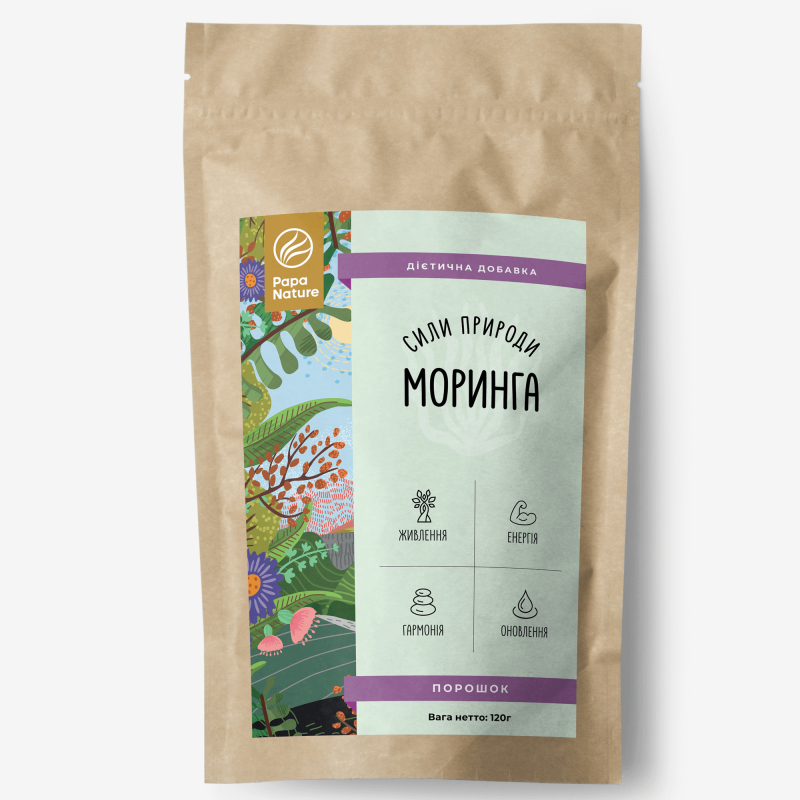
Moringa PapaNature Moringa oleifera 120g
✔️ Exceptional nutrient density - vitamins, minerals, amino acids
✔️ Natural energy and vitality support
✔️ Antioxidant protection
✔️ 100% Moringa oleifera leaves, no fillers
✔️ Versatile format - beverage, smoothie, food


✔️ Exceptional nutrient density - vitamins, minerals, amino acids
✔️ Natural energy and vitality support
✔️ Antioxidant protection
✔️ 100% Moringa oleifera leaves, no fillers
✔️ Versatile format - beverage, smoothie, food
Moringa PapaNature Moringa oleifera 120g
✔️ Exceptional nutrient density - vitamins, minerals, amino acids
✔️ Natural energy and vitality support
✔️ Antioxidant protection
✔️ 100% Moringa oleifera leaves, no fillers
✔️ Versatile format - beverage, smoothie, food
Some plants nourish. Moringa is one of the few that truly does. Not a single nutrient or narrow active compound profile - but a complex nutrient density that is difficult to find in any other plant source. This is why in the countries where it grows, it is simply called the "tree of life".
What is this plant?
Moringa oleifera is a fast-growing tree of the Moringaceae family, native to the sub-Himalayan regions of northwestern India. Today Moringa is cultivated throughout tropical Africa, Asia and Latin America. Leaves, seeds, bark and roots - all parts of the plant are used in traditional medicine and cooking. But it is the leaves that hold the richest and most studied nutrient profile.
Traditional Use
In Ayurveda, Moringa is known as "Shigru" and is mentioned as a remedy acting against more than three hundred conditions - eloquent testimony to the breadth of its traditional use. In Africa, Moringa leaves are part of the daily diet - added to soups, sauces and porridges as an accessible and nutritious source of micronutrients. In the Philippines, the traditional soup "Tinola" with Moringa leaves is a symbol of domestic care and health. UNICEF and WHO have included Moringa in nutrition programs in developing countries - international recognition of its established nutritional value.
Nutrient Profile
Moringa leaves contain vitamin A, B vitamins, vitamin C and vitamin E, calcium, iron, magnesium, potassium and zinc. The plant is a complete protein source - containing all nine essential amino acids, which is rare among plant foods. The antioxidant profile includes quercetin, chlorogenic acid and beta-carotene. In total, over 90 biologically active compounds have been identified in Moringa leaves.
How to Use
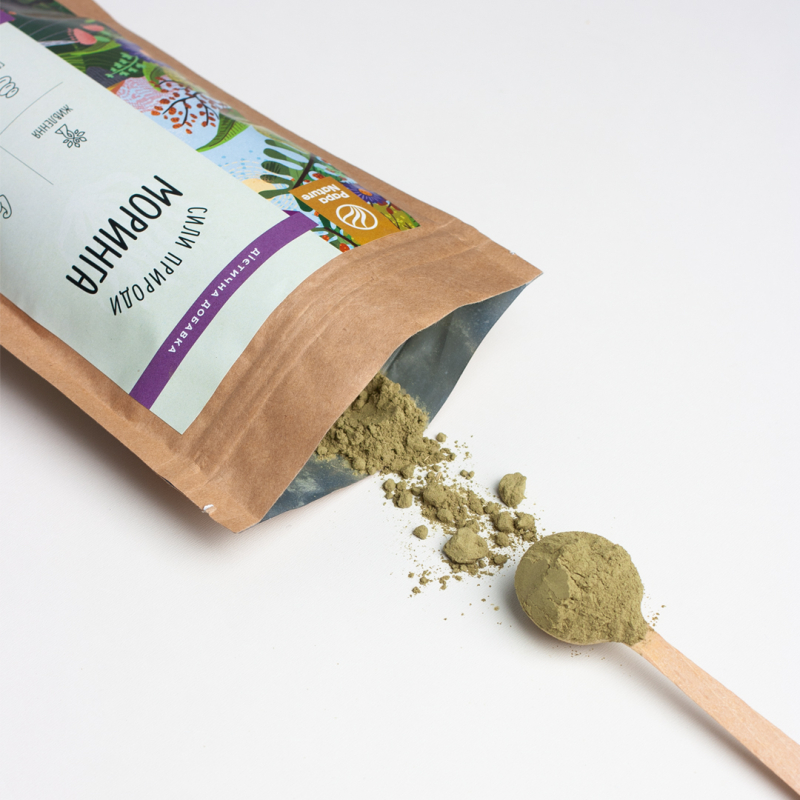
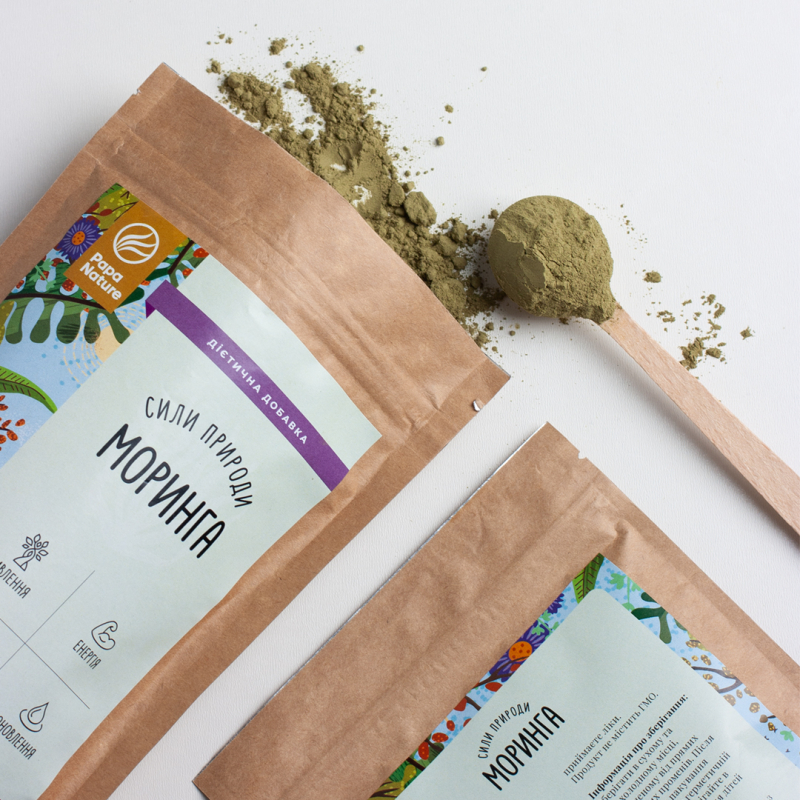
Moringa powder is versatile in application. Add 1 teaspoon (2-3g) to warm water or herbal tea and stir - creating a functional beverage with a characteristic herbal taste. The powder also blends easily into smoothies, yogurt or oatmeal - the green color and mild herbal flavor pair well with fruits and berries. It can be added to soups and sauces at the end of cooking to preserve heat-sensitive nutrients.
Recommended dose: 1-2 teaspoons per day. Start with a smaller dose and gradually increase.
Composition: 100% Moringa leaves (Moringa oleifera).
Storage: Store in airtight packaging in a dry, light-protected place at room temperature.
Note: As this is a fully natural product, the color and flavor intensity of the powder may vary slightly depending on the harvest season - a sign of authentic, natural plant material.
| Specifications | |
| Weight | 120 г |
| Product type | Порошок |
| Number of servings | 60 |
| Country of manufacture | Україна |