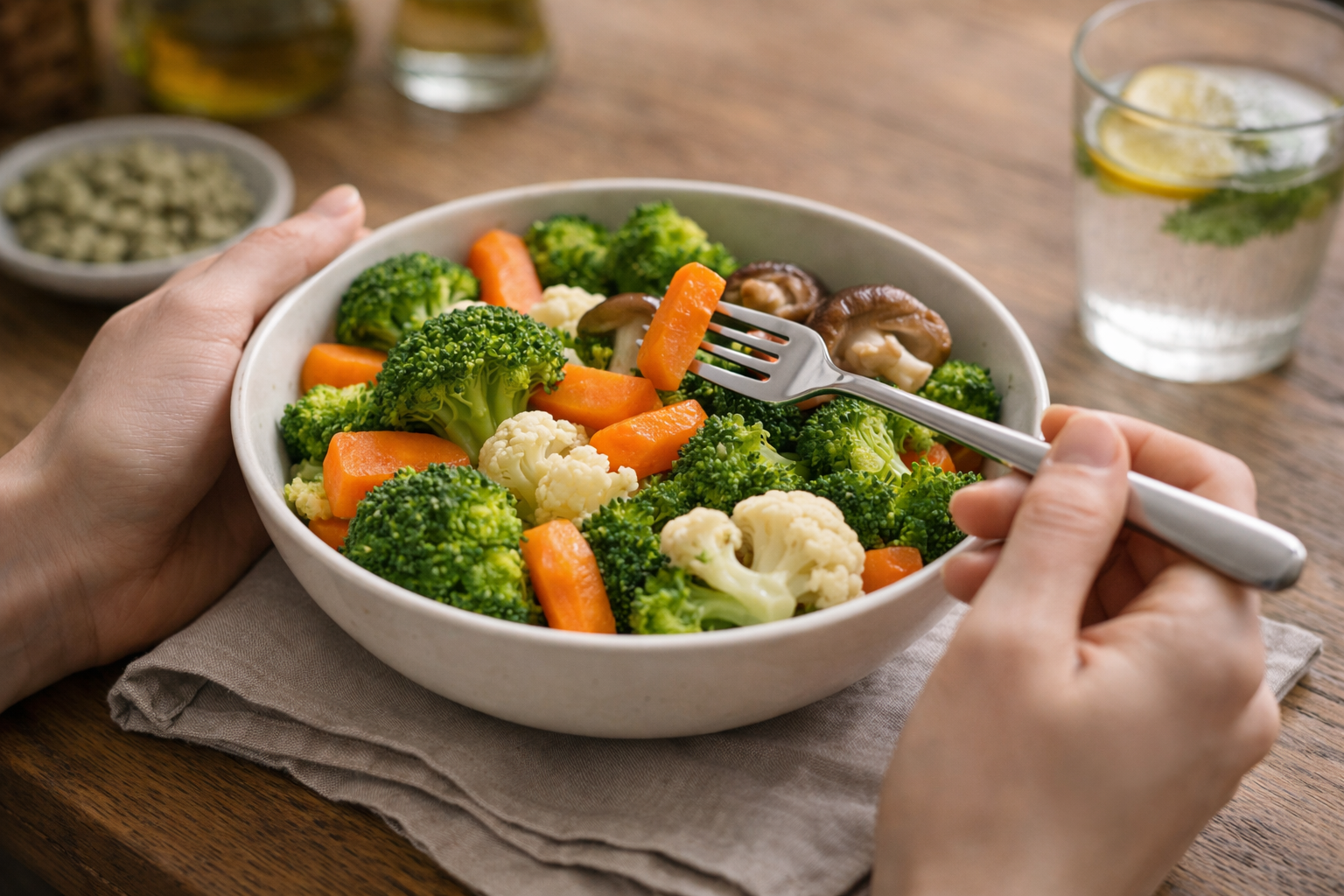
In 2012, the US National Institutes of Health completed the Human Microbiome Project - the first large-scale attempt to map the microbial world of the human body. The findings surprised even the researchers: two completely healthy people may share no dominant bacterial species at all. Yet despite different compositions, their microbiomes perform the same functions. This shifted the definition of a healthy microbiome: not a specific set of bacteria, but a balanced, diverse community that does its job.
What Is the Microbiome - and Why It's More Than "Good Bacteria"
How Many Are There and Where Do They Live
The human body hosts around 40 trillion microorganisms - bacteria, fungi, viruses and archaea. According to Sender et al. (Weizmann Institute, 2016), their numbers roughly equal the body's own cells. Most of them live in the large intestine, where food moves slowest and conditions for microbial life are best.
These organisms do not simply coexist with us - they actively interact with the host. Together their genetic material contains 150 times more genes than the human genome. Some of those genes encode functions the human body does not have on its own - such as breaking down certain types of fiber or synthesizing specific vitamins.
Why the Microbiome Is Called an Organ
The microbiome influences digestion, the immune system, metabolism and even brain function. It begins forming within the first hours of life - through birth, breast milk and the environment - and continues changing throughout life based on diet, lifestyle and health. This is why it is increasingly treated not as a passive resident, but as an active organ with its own functions.
Fiber - the Primary Fuel for the Microbiome
The microbiome lives on what the body itself does not absorb. The main source is dietary fiber: complex carbohydrates that pass through the stomach and small intestine unchanged, reaching the large intestine where gut bacteria ferment them.
Dietary fiber comes in two types - soluble and insoluble. Most foods contain both, just in different proportions. They perform different functions and interact with the microbiome in different ways - which is why it helps to understand each separately.
Soluble Fiber: What It Does and Where to Find It
Soluble fiber absorbs water and forms a gel-like mass. It slows the movement of food through the gut, slows the absorption of sugar and bile acids, and serves as the primary substrate for bacterial fermentation. Fermentation produces short-chain fatty acids - more on those in the spoiler below.
Found in: oat bran, legumes, apples, onions, garlic, seaweed - and mushrooms. Mushroom soluble fiber has a unique profile - beta-glucans and chitosan - not found in plant sources.
Insoluble Fiber: A Different Role, Equally Important
Insoluble fiber does not absorb water and is not fermented as actively. It speeds transit through the gut, adds bulk to stool and supports motility. Its role is mechanical: maintaining regular bowel movements and reducing the time potentially harmful substances spend in contact with the gut wall.
Found in: whole grains, vegetable and fruit skins, nuts, seeds - and chitin from mushrooms, which is a specific type of insoluble fiber not found in plants.
Why Fiber Diversity Matters More Than Quantity
Different bacterial strains feed on different types of fiber. If a person eats only one type, certain groups of microflora gain an advantage while others gradually disappear. Diversity of fiber sources supports microbiome diversity - which is a key marker of gut health. Sonnenburg et al. (Cell, 2021) found that microbiome diversity correlates with lower levels of systemic inflammation, independent of other factors.
More detail: what happens when bacteria ferment fiber
When bacteria ferment soluble fiber, they produce short-chain fatty acids (SCFAs). The three main ones are butyrate, propionate and acetate. Butyrate is the primary fuel for colonocytes - the cells lining the colon - and a regulator of gene expression through inhibition of histone deacetylases. Propionate travels to the liver and influences glucose synthesis. Acetate enters the bloodstream and acts as a systemic signal to peripheral tissues. SCFAs also directly influence immune cells - reducing production of pro-inflammatory cytokines and supporting regulatory T-cells.
The Microbiome and the Immune System
Why 70% of Immunity Lives in the Gut
Around 70–80% of the body's immune cells are located in the gut or associated with gut-associated lymphoid tissue. This is not coincidental: the gut is the first place the body encounters what enters from outside. The microbiome trains the immune system from the earliest days of life - helping it distinguish threats from harmless material.
When the microbiome is balanced, the immune system responds precisely and proportionally. When the balance is disrupted, two extremes become possible: either an insufficient response to real threats, or an excessive response to harmless substances - which underlies allergies and autoimmune conditions.
How Dysbiosis Triggers Chronic Inflammation
Dysbiosis - an imbalance between groups of microorganisms - can lead to increased gut permeability. When the junctions between gut epithelial cells weaken, bacterial fragments enter the bloodstream and activate the immune system. A background inflammation develops without any acute infection - what Sonnenburg & Bäckhed (Cell, 2016) called "inflammatory tone." This inflammation is quiet and slow-moving, but is associated with the development of metabolic and cardiovascular conditions over time.
More detail: what happens at the cellular level
Beta-glucans from food and gut bacteria bind to Dectin-1 and TLR-2/TLR-4 receptors on dendritic cells and macrophages in gut-associated lymphoid tissue. This triggers a cascade that regulates the balance between pro-inflammatory (Th1, Th17) and anti-inflammatory (Treg) T-lymphocyte populations. Secretory IgA - an antibody produced at mucosal surfaces - is a key marker of mucosal immune function. In dysbiosis, sIgA levels fall, reducing protection of the mucous membranes of the respiratory tract and digestive system.
The Microbiome and Metabolism
How Bacteria Affect Blood Sugar and Cholesterol
The microbiome participates in metabolic regulation through several mechanisms. First - through fiber fermentation and SCFA production, which signal cells about the state of energy balance. Second - through bile acids: gut bacteria convert primary bile acids into secondary ones, which act as signaling molecules and influence fat absorption and glucose regulation. Third - through satiety hormones: bacteria influence the production of GLP-1 and PYY, hormones that signal the brain about fullness.
The Microbiome and Body Weight - What Research Shows
One of the most cited studies in this field involved transplanting microbiomes from obese mice into lean ones (Turnbaugh et al., Nature, 2006): the lean mice began to gain weight. Human studies are more complex due to variation in diet and lifestyle - but the general correlation between microbiome diversity and lower body weight has been confirmed in large cohort studies.
More detail: SCFAs and metabolic signaling
Propionate activates GPR41 and GPR43 receptors on gut epithelial and fat cells, stimulating production of PYY and GLP-1. GLP-1 slows gastric emptying, reduces appetite and enhances insulin secretion in response to food. The GLP-1 receptor agonist class of drugs - used in type 2 diabetes and obesity - is built on this same molecular logic. Butyrate additionally influences insulin sensitivity through epigenetic mechanisms - inhibiting HDAC histone deacetylases and altering the expression of genes involved in glucose metabolism.
The Gut-Brain Axis: How the Gut Talks to the Brain
Serotonin and Where It Comes From
Around 90–95% of the body's serotonin is produced not in the brain, but in the gut - by enterochromaffin cells in the intestinal lining. The microbiome directly influences this process: certain bacterial strains stimulate serotonin production while others suppress it. Gut serotonin regulates motility and sends signals through the vagus nerve to the brain.
The Vagus Nerve as a Direct Line
The vagus nerve - the longest nerve of the autonomic nervous system - connects the gut directly to the brain. Signals travel in both directions, but most go upward: from gut to brain. The microbiome influences these signals through metabolites and neurotransmitters produced in the gut. Cryan et al. (Nature Reviews Neuroscience, 2019) compiled the evidence: microbiome changes correlate with anxiety, depression and cognitive function - through serotonin, GABA and the neurotrophic factor BDNF.
More detail: neurotransmitters and microbial metabolites
The microbiome influences the gut-brain axis through three parallel channels. Neural: direct signals through afferent vagus nerve fibers - bacterial metabolites activate enteroendocrine cells that relay the signal onward. Endocrine: serotonin, GABA and short peptides enter the bloodstream and reach the brain through the blood-brain barrier or through circumventricular organs where the barrier is incomplete. Immune: cytokines IL-6 and TNF-α produced during dysbiosis promote neuroinflammation and reduce neuroplasticity by lowering BDNF - the brain-derived neurotrophic factor.
What Damages the Microbiome
Antibiotics - the Strongest Blow
Antibiotics do not only target pathogens - they affect beneficial microflora too. A single course of broad-spectrum antibiotics can alter the microbiome composition for months, and some changes persist for years. This does not mean avoiding antibiotics when they are needed - but supporting the microbiome through varied eating and prebiotics after a course makes sense.
Diet, Stress and Sleep - the Slow Factors
A diet low in fiber and high in refined carbohydrates gradually depletes the microbiome - certain strains simply lose their substrate and disappear. Chronic stress raises cortisol levels, which alters gut motility and microbial composition. Even a few nights of disrupted sleep has a measurable effect on microbiome diversity, according to human studies.
Ultra-processed food, alcohol and smoking are additional factors that reduce microbiome diversity and increase gut permeability.
What Recovers and What Does Not
After short-term disruptions - dietary or medication-related - the microbiome partially recovers in most people. But with prolonged exposure to damaging factors, certain strains may disappear permanently, especially if there is no source for recolonization. This is one more argument for dietary diversity as prevention, not just treatment.
Mushrooms and the Microbiome - What the Body Actually Gets
Most people eat mushrooms for the taste. But from the microbiome's perspective, mushrooms are a unique source of fiber not found in vegetables or grains. Beta-glucans and chitin - specific polysaccharides from the mushroom cell wall - serve as substrate for gut microflora and simultaneously carry immune signals through the gut wall. This combination - prebiotic plus immune modulator in one food - makes mushrooms a distinct category of dietary components.
What matters is understanding what the body actually receives. A cup of tea brewed from mushroom powder delivers water-soluble beta-glucans that interact directly with immune cells in the gut wall. A water-based extract in capsules provides a concentrated, standardized dose of polysaccharides. Whole fruiting body powder provides both soluble polysaccharides and insoluble chitin, along with all other components in their natural ratio. Powder maximizes the prebiotic effect; extract delivers a more precise immune signal.
Auricularia - Record Fiber and Butyrate
Auricularia auricula-judae (wood ear mushroom) contains 70–80% dietary fiber by dry weight - more than any other edible mushroom. This fiber is actively fermented by gut bacteria, producing butyrate - the primary fuel for colon wall cells. Research has shown that auricularia restores microbiome composition even after disruption, including after chemotherapy (Kong et al., 2020). For gut health specifically, it has the highest prebiotic potential among edible mushrooms.
Shiitake - Specific Substrate for Specific Strains
Shiitake contains trehalose - a disaccharide that serves as a specific substrate for Lactobacillus brevis and Bifidobacterium breve. This means shiitake feeds particular strains rather than gut microflora in general. Additionally, shiitake beta-glucans interact with gut-associated lymphoid tissue and raise secretory IgA levels - a marker of mucosal protection. The randomized trial by Percival et al. (University of Florida, 2011) documented these changes at dietary doses - 5–10 g of dried shiitake daily over four weeks.
Turkey Tail and Maitake - Beta-Glucans and Immune Signaling
Turkey tail (Trametes versicolor) is one of the most extensively studied mushrooms for immune support. It contains diverse beta-glucans and polysaccharides that interact with gut-associated lymphoid tissue and modulate the immune response. Maitake (Grifola frondosa) contributes beta-glucans with influence on glucose metabolism and immune function. Both pair well with auricularia and shiitake in a daily diet - different polysaccharide profiles, different substrates for the microflora.
Chanterelle - a Familiar Mushroom with an Interesting Research Profile
The golden chanterelle (Cantharellus cibarius) is widely foraged and eaten across Europe. Scientifically it is less studied than shiitake or auricularia - but new data are appearing. A 2024 study (Frontiers in Pharmacology) found that chanterelle polysaccharides restored the gut barrier, reduced inflammation and normalized the microbiome in a mouse model of colitis. Prebiotic potential toward Lactobacillus strains has been confirmed separately (ScienceDirect, 2018), as has antibacterial activity against H. pylori. Chanterelle also contains carotenoids, vitamin D and selenium - a nutritional profile unusual for most cultivated mushrooms.
Lion's Mane and the Gut-Brain Axis
Lion's mane (Hericium erinaceus) is the only edible mushroom with documented effects on neurotrophic factors. Compounds from its fruiting bodies and mycelium act through different molecular pathways - the combined result is stimulation of neurotrophins including NGF (nerve growth factor). For the gut-brain axis it matters on two levels: as a source of beta-glucans for the microbiome, and as a mushroom that influences neurotrophic support of the nervous system through that same axis. The mechanism is complex and depends on the form of the product - more detail in the dedicated lion's mane article.
Psyllium as a Synergistic Partner
Psyllium - husks from Plantago ovata seeds - is a different type of soluble fiber. It forms a dense gel in the gut, slows transit and feeds the microflora. The difference from mushroom fiber: psyllium works primarily through gel formation and coating, while mushroom fiber works through beta-glucan signaling and a specific substrate profile. Together they complement each other - different fiber types for different microbial strains. The logic is diversity, not duplication.
How to Build a Diet for the Microbiome
Diversity as the Core Principle
The Human Microbiome Project and subsequent research established that microbiome diversity is a more reliable marker of gut health than the presence of any specific strains. Diversity is maintained by eating a wide variety of foods - especially varied fiber sources. A practical guideline from nutrition research: 30 different plant foods per week as a diversity target. Mushrooms count as a separate category - each species adds its own polysaccharide profile and is counted individually.
Powder, Extract, Capsules - What Reaches the Gut
Whole fruiting body powder delivers the fullest matrix - soluble polysaccharides, insoluble chitin and micronutrients together. Both prebiotic and immune effects at once.
Water-based extract provides concentrated soluble beta-glucans at a predictable dose. Less fiber, but a more precise immune signal. Best for those who want a standardized result.
Capsules contain the same extract in a convenient daily format - no brewing required.
All three forms have their place depending on the goal. Powder for daily dietary enrichment. Extract and capsules when dose precision and consistency matter.
Where to Start and How to Rotate
For the microbiome, consistency and variety matter more than large one-off amounts. Starting with one or two mushrooms and adding others gradually gives the microbiome time to adapt to new substrates. A temporary increase in bloating when fiber intake rises sharply is normal - it is the microflora adjusting to new material, not a sign of a problem.
Rotating different mushrooms across the week - auricularia, shiitake, chanterelle, turkey tail - delivers a broader spectrum of polysaccharides and supports microbiome diversity better than eating one species consistently. Psyllium can be added alongside as a separate source of gel-forming fiber - in the morning with water or in drinks.
The microbiome changes slowly: the first measurable shifts in composition are recorded after 4–6 weeks of consistent eating. This is not a protocol with a start and end date - it is a way of eating.